Wildlife

Who's actually out there, and how we know.

Most of what lives in a forest never shows itself to a visitor. Camera traps, tracks, scat, and a lot of patient, quiet sitting are how we build a picture of who's really sharing the land.

Species spotlights

A few we've been watching closely

Mammal

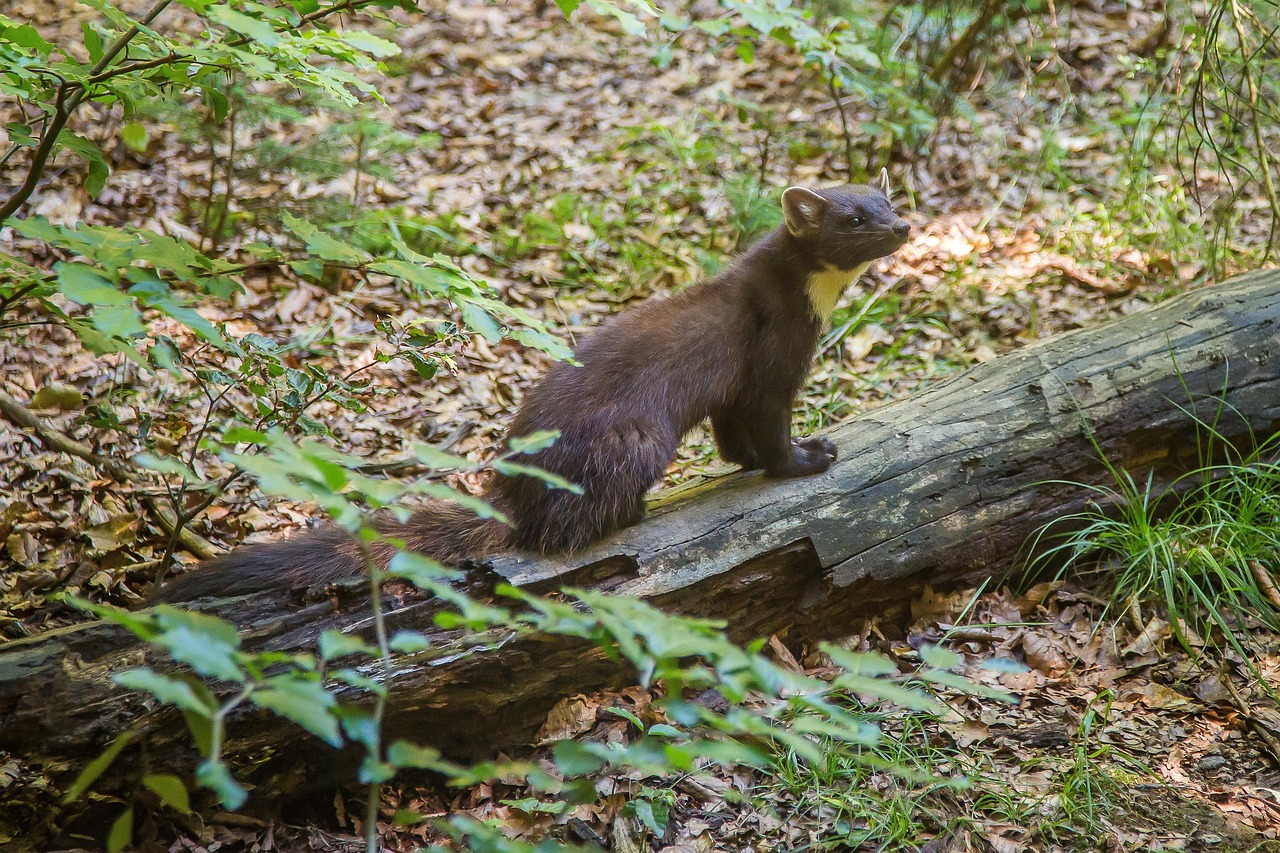
Pine marten

Shy, mostly nocturnal, and a useful indicator species — martens need mature forest with plenty of denning cavities, so their return to a site usually means the habitat structure is recovering well.

Bird

Black woodpecker

The largest woodpecker across much of its range, and something of an ecosystem engineer — the cavities it excavates get reused for years afterward by owls, martens and bats.

Amphibian

Fire salamander

Slow-moving and easy to miss, but a reliable signal of stream water quality — they're among the first species to disappear from a site once runoff or sedimentation gets bad enough.

Pine marten on a mossy branch
Pine marten, spotted along the ridge trail

How the camera traps actually work

We run a rotating set of motion-triggered cameras across a handful of fixed points, mostly along game trails and stream crossings, and leave them for four to six weeks at a time before checking and relocating them.

It's slower and less exciting than it sounds — most captures are the same handful of resident animals passing the same spot repeatedly. The value is in the pattern over years, not any single photo.

Reading tracks and sign

Cameras cover fixed points; tracking on foot covers everything in between. A good snow morning or a soft patch of mud after rain tells you more about who's actually moving through an area than weeks of camera footage.

None of this is exotic knowledge — it's mostly patience, repetition, and being willing to get your knees wet.